
Conversational marketing continues to be a marketing trend. Conversations and their significance in building customer relationships are nothing new, but with technological advancement and constantly evolving customer behavior, multi-channel conversations create new opportunities and challenges in the market.
What Is Conversational Marketing?
HubSpot defines conversational marketing as the ability to have personalized conversations with customers across multiple channels—how, where, and when they prefer.
Conversational marketing is often confused with chatbots or live chats on websites, but it is much more than that. It is a multi-channel presence that considers each customer as an individual: conversations are taken to where each customer already is. The conversation happens on the customer’s terms and must be ready to continue later through any channel without losing the thread. The customer and the conversations held with them must be remembered.
Customers Value Personalization and Convenience
From the customer’s perspective, all of this sounds like winning the lottery. People are spending more and more time on social media and staying in touch with each other through instant messaging channels. This ease of communication is desired to be transferred to interactions with companies as well.
Instead of scrolling through a company’s website or waiting in customer service queues, people want to handle things at a faster pace now. Who wouldn’t want to handle matters in their own preferred way, as easily as possible and in a familiar channel—whether that’s text message, WhatsApp, or a social media channel.
Example:
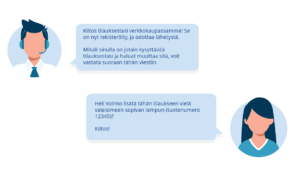
Consider a situation where a person has just purchased a lamp from an online store. After placing the order, they receive an automatic order confirmation via text message. Immediately upon receiving the message, the customer realizes they forgot to add light bulbs to their order. In such a situation, the customer typically has the following options:
1. Search for customer service email address or phone number to modify the order
2. Place an entirely new separate order with its own delivery costs
3. Buy the bulbs elsewhere during the next shopping trip
One could imagine that most consumers would choose the last option due to its convenience. When the customer has the opportunity to start an informal conversation by simply replying to the order confirmation, they are offered a straightforward way to modify the order and ask questions. The customer can then complete the additional order in the same channel to which they have already been directed through the order confirmation.
Companies Must Offer Multi-Channel Connections
WhatsApp, Facebook Messenger, and other instant messaging channels are becoming an important venue for conversations between companies and customers. This requires companies to have the ability to be present across different channels and manage countless conversations simultaneously. There are numerous instant messaging channels, and in addition, the customer base can be quite diverse, including representatives from many different age groups, which adds its own challenge to multi-channel conversation.
Conducting conversations across multiple channels is possible, but requires a significant amount of resources from companies as well as a continuously updated customer database. Alternatively, conversations can also be conveniently managed with one and the same system. With SmartDialog, you can both respond to your customers’ messages and initiate conversations with target groups across different instant messaging channels.